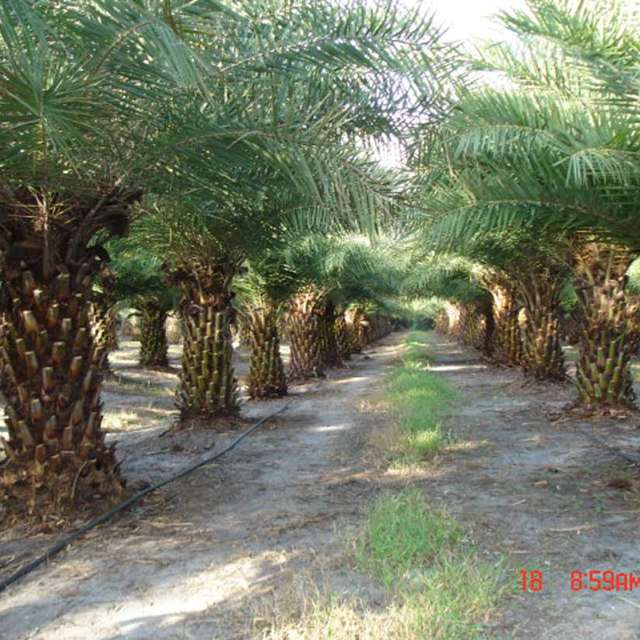
Field-grown and container-grown palms are raised in very different ways. That difference shows up when you dig the hole and when the palm starts to settle in. Our palms are field-grown on the farm in Vero Beach, not containerized, so it helps to know what that means for you.
What field-grown means
A field-grown palm grows in the ground on the farm. Its roots develop in the same soil that surrounds it through the years of growth. When it is time to move the palm, the crew root-wraps it in the field. The root ball stays with the soil the palm grew in, rather than being shaped by the edges of a pot.
This is the main reason we talk about field-grown palms so often. The growing process happens outdoors, in the open, and the palm is dug when it is ready to move.
What container-grown means
A container-grown palm grows in a pot, and its roots fill that pot over time. In many cases, roots can circle the inside of the container. When the palm is planted, those roots need time to spread out into the surrounding soil. Good planting technique can help, but the starting point is different from a palm grown in the ground.
If you are comparing options, ask how long the palm has been in its container and how the roots look when you lift the root ball. Those are fair questions for any grower.
How the root system develops
A palm grown in the ground develops its roots in the soil around it. The roots grow out as the palm matures, and they have room to reach for water and nutrients. That is why the root ball matters so much at transplant. You want the roots to stay with the soil, and you want the palm kept moist and protected until it goes in the ground.
When your palm arrives, check that the root wrap is intact and the root ball is still moist. Do not let the root ball dry out before planting.
How trunk and height are judged
Trunk development is a slow process. Palms in the field grow at their own pace, and each one has its own shape. Our Sylvester palms are graded as specimen and Florida Fancy. Sizes run from 7 ft overall height up to 9 ft of clear trunk. Some specimens are over 20 ft overall height.
Overall height and clear trunk are different measurements. Overall height includes the fronds, while clear trunk is the bare trunk below them. Ask which measurement a listing uses, so you know what you are getting.
What to expect at transplant
Transplant day is busy. The palm is lifted from the field, loaded with a loader onto a trailer or flatbed, and taken to your site. The root wrap protects the root ball on the trip. Once the palm is on site, the planting clock starts.
Plan for a crew and enough space to maneuver. Make sure the path to the planting spot is clear and that the ground is ready. A little planning on the front end makes the big day smoother.
Plant as soon as you can
Plant the palm as soon as possible after delivery. If you must wait, keep the root wrap on and place the palm in a shady, well-ventilated spot. Do not leave it sitting in full sun while you finish other work. A short delay is manageable, but a long one puts stress on the root ball.
Dig and backfill the hole
Dig the hole about twice as wide as the root ball, but only as deep as the palm was grown. Never bury the trunk. Backfill with a soil and gravel mix, and pack out any air pockets as you go. Build a soil dam around the edge, then soak the planting area fully.
Take your time with this step. Good contact between the root ball and the soil helps the palm settle in. Check that the trunk sits at the right height before you finish filling the hole.
Water in the first two weeks
After planting, water daily or every other day for the first two weeks. Keep the soil moist, but do not let it turn into standing water. Check the soil with your finger. If the top few inches feel dry, it is time to water. Good watering habits in the early weeks help the palm adjust to its new home.
Feed your palm with a plan
Fertilize in spring, summer and early fall with a slow-release fertilizer. Look for a blend that includes manganese, magnesium, potassium, iron and copper sulfates. Follow the label directions for amounts. Steady feeding is better than a single heavy dose.
Visit the farm and pick your palm
Customers can visit the farm, walk the rows and pick the exact palm they want. Call ahead before you visit, so we can be ready for you. Seeing the palms in person helps you compare height, trunk shape and grade side by side.
Jerry meets customers in the field. Bring your questions, and you can talk through the planting plan right there among the palms.
Delivery and planning your order
Delivery is available for every order. The crew root-wraps the palm in the field, loads it and delivers it to your site. The delivery price is not published, so call with your planting address for a quote. That way the quote matches your location and your palm.
Questions to ask a grower
Whether you buy from us or another grower, a few direct questions help you plan:
- Was this palm field-grown or container-grown?
- What grade is it, and what are the overall height and clear trunk?
- How is the root ball wrapped and protected for the trip?
- What planting and watering steps do you recommend for my site?
- What fertilizer do you suggest for the first year?
Based in Vero Beach
Sylvestris Tree Farms is based in Vero Beach, FL, and we serve Vero Beach and Indian River County. You can learn more about our farm and our growing practices, or read about our Sylvester date palms.
Ready to choose your palm? Call 772-778-3006 with your planting address for a delivery quote, or call ahead to plan a visit to the farm.
Frequently Asked Questions
What does field-grown mean for a palm?
A field-grown palm grows in the ground on the farm. The crew root-wraps the root ball in the field before the palm is delivered.
How deep should I dig the hole for a new palm?
Dig the hole about twice as wide as the root ball, but only as deep as the palm was grown. Never bury the trunk.
How often should I water a newly planted palm?
Water daily or every other day for the first two weeks, keeping the soil moist without letting it sit in standing water.
How do I get a delivery quote?
Call 772-778-3006 with your planting address. The delivery price is not published, so the team will give you a quote for your location.