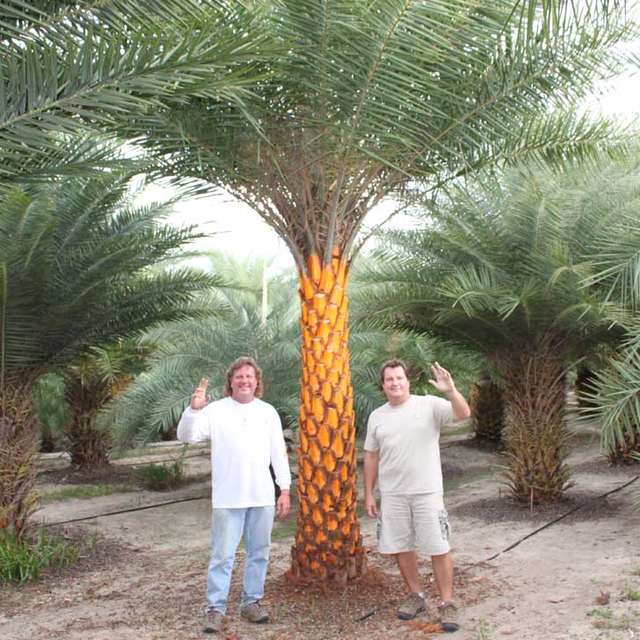
Landscape designers and arborists need palms that look right on the day they go in. The best way to source a specimen palm is to choose a grower who field-grows the palm, lets you walk the rows, and can deliver to the site. Ask about size range, grade, root structure, and how the palm will be loaded and moved.
Why Field-Grown Matters for Specimen Palms
A field-grown palm grows in the ground on the farm, not in a container. Its roots spread out in native soil and develop a strong root ball. That root ball is what keeps the palm steady and healthy after it is moved. A palm grown in a container often has roots that circle the pot. Those roots can struggle once the palm goes into a new yard.
Know the Palm You Want
The Sylvester palm is also called the India date palm or silver date palm. Its botanical name is Phoenix sylvestris Robusta. Naming the palm correctly helps you compare sources. It also helps you match the plant to the design and the climate.
Think about the role the palm will play. A single palm can anchor an entryway or a corner of a lot. A matched pair can frame a driveway or a courtyard. Commercial projects may need several palms of the same size and grade. Know the role first, then choose the size.
Size: Overall Height and Clear Trunk
Palm sizes are often described in two ways. Overall height measures the whole palm from the ground to the top of the fronds. Clear trunk measures the height of the bare trunk before the fronds begin. Both numbers matter for the look of the design. A tall clear trunk can give a palm a more formal feel. A shorter trunk with full fronds can look more relaxed.
At our farm, sizes run from about 7 feet of overall height up to 9 feet of clear trunk. Some specimens go over 20 feet of overall height. Ask for the exact measurements of each palm you consider. A photo is helpful, but a visit is better.
Grade: Specimen and Florida Fancy
Grade describes the overall quality and shape of the palm. Specimen grade palms are chosen for their form, trunk, and crown. Florida Fancy is another common grade. Ask what each grade means for the palm you are buying, and ask how the grade is judged. A clear answer helps you match the palm to the design goals and the budget for the project.
Root Structure and Root Wrap
The root ball is the core of a healthy palm. Ask how the crew protects it during digging, loading, and transport. A proper root wrap holds the soil around the roots and keeps the palm stable. Ask whether the root wrap stays on during transport and planting, and how long the palm can wait before it goes in the ground.
If planting must wait, keep the root wrap on. Place the palm in a shady, well-ventilated spot. Plant it as soon as you can after delivery. A palm that sits too long in the sun or in a closed trailer can stress quickly.
Visiting the Farm
A farm visit lets you pick the exact palm you want. Walk the rows, look at each palm, and check the trunk, fronds, and root wrap. Bring photos of the site and the design plan. Measure the space where the palm will go, so you can match the height and spread to the setting.
Visits are welcome, but please call ahead before you come to the farm. Owner Jerry meets customers in the field, so a call helps set a time that works for both of you.
Delivery to the Job Site
Delivery is available for every order. The crew root-wraps each palm in the field, loads it with a loader onto a trailer or flatbed, and delivers it to the site. Ask how the palm will be secured during transport. Ask how the crew will unload it and where it will sit when it arrives.
Delivery price is not published on our site. Call 772-778-3006 with the planting address, and we will provide a quote for delivery. Having the address ready helps us plan the route and the load.
Planting Basics for a New Palm
Dig the hole about twice as wide as the root ball. The hole should be only as deep as the palm was grown. Never bury the trunk. Backfill with a mix of soil and gravel, and pack it firmly to remove air pockets. Build a soil dam around the edge of the hole, then soak the palm fully. The soil dam holds water where the roots can reach it.
After planting, water the palm daily or every other day for the first two weeks. Once the palm is established, you can shift to a regular watering routine that matches the weather.
Feeding Your Palm
Fertilize in spring, summer, and early fall. Use a slow-release fertilizer that includes the nutrients palms need, such as manganese, magnesium, potassium, iron, and copper. Follow the label for the amount and timing. Too much fertilizer can burn roots, so go slowly and keep the product away from the trunk.
Care Over the Long Term
The farm describes the Sylvester palm as cold-hardy, wind tolerant, and low maintenance once it is established. It is also described as resistant to many common diseases and pests. Even so, check the palm regularly. Look for stressed fronds, discoloration, or new pests.
Questions to Ask Before You Buy
- What are the overall height and clear trunk measurements for this palm?
- What grade is this palm, and how was it judged?
- How is the root ball protected during digging and transport?
- Can I visit the farm and pick the exact palm?
- How will the palm be delivered and unloaded at my site?
- What planting and watering steps should I follow?
Sourcing for Commercial Projects
Commercial designers often need palms that match across a large site. Ask how many palms can be sourced at the same size and grade, and when they can be delivered.
Start Your Palm Project in Vero Beach
Sylvestris Tree Farms is based in Vero Beach, FL, in Indian River County. We grow field-grown Sylvester date palms and offer delivery for every order. You can also read about our Sylvester date palms to learn more about the palms we grow.
If you have questions about a specific project, reach out through our contact page.
Ready to pick your palms? Call Sylvestris Tree Farms at 772-778-3006. Tell us the planting address and the size you need, and we will help you plan the visit, the delivery, and the planting steps. We look forward to helping you find the right palm for your design.
Frequently Asked Questions
What is a Sylvester palm?
The Sylvester palm, Phoenix sylvestris Robusta, is also called the India date palm or silver date palm.
What is the difference between overall height and clear trunk?
Overall height is the full height from the ground to the top of the fronds. Clear trunk is the bare trunk height before the fronds begin. Both affect the look of the design.
Can I visit the farm to choose my palm?
Yes. Visits are welcome, but please call ahead. You can walk the rows and pick the exact palm you want.
Do you deliver palms?
Delivery is available for every order. Call 772-778-3006 with the planting address to get a delivery quote.