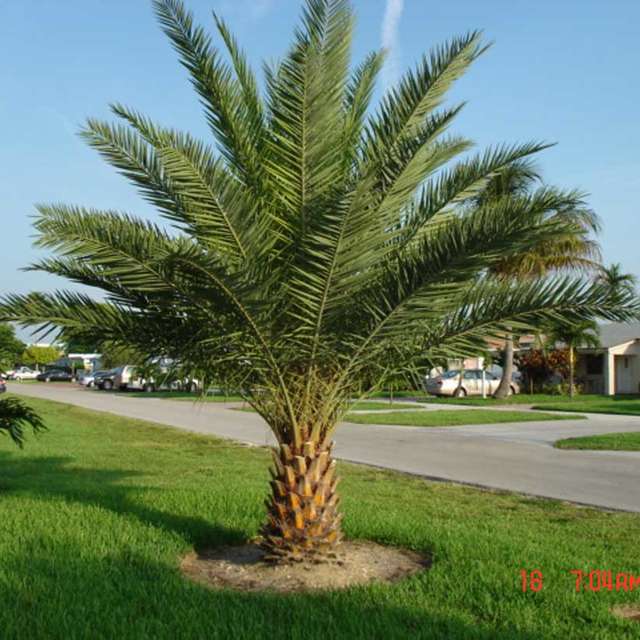
Transplant shock in a newly planted Sylvester palm typically shows up as yellowing or browning fronds, drooping, and a pause in new growth — and for most palms, it's a normal, temporary adjustment rather than a sign the tree is dying. Early signs of recovery can appear within a few weeks; fully settling in can take several months to a year. Knowing what's normal versus what needs a call to the farm makes the wait a lot less stressful.
What Does Transplant Shock Look Like in a Sylvester Palm?
The signs are fairly consistent: some yellowing or browning on the fronds, a bit of drooping, and growth that seems to stall out rather than push forward the way it did in the field. It can look like the palm is struggling, and in a real sense it is — but for a properly planted, healthy specimen, this is usually the tree working through a normal adjustment period rather than a sign of a deeper problem.
Why Do Newly Planted Palms Go Into Shock?
The root cause, almost literally, is root loss. Digging a palm out of the field or a container disturbs the root system, and the palm suddenly has fewer roots than it did before, combined with a new soil environment, different light exposure, and a different watering pattern than it's used to. That combination of changes is what triggers the stress response. It's a predictable, expected part of the transplanting process — not a sign that something was done wrong, as long as the planting itself followed the right depth, backfill, and watering steps.
How Long Does It Take a Palm to Recover From Transplant Shock?
Recovery happens in stages. You may see the first signs of stabilizing — the decline leveling off, or a hint of new growth — within the first few weeks. But fully settling back into a normal growth rhythm is a longer process, often stretching several months, and for some palms it can take up to a year or more before the tree is fully re-established in its new location. Patience matters more than intervention during this window.
When Should You Actually Worry?
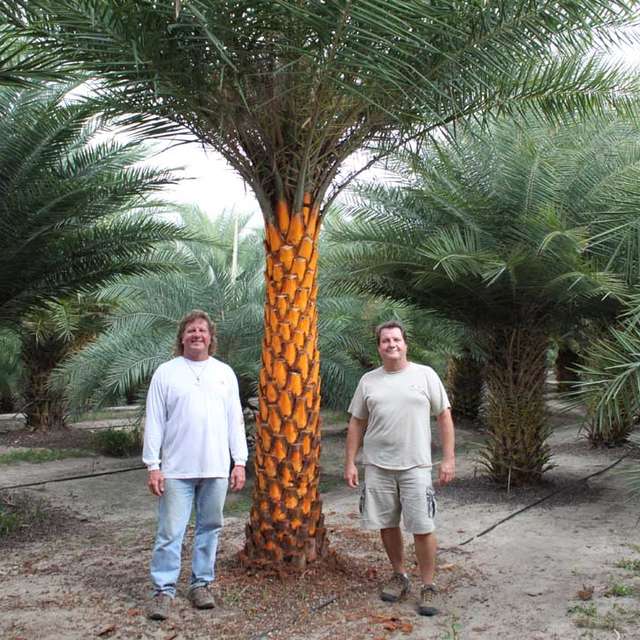
Some yellowing and a temporary growth pause are expected. It becomes a more serious concern if the decline keeps spreading rather than leveling off, if it starts affecting the newest emerging growth instead of just the older fronds, or if the trunk itself looks soft or compromised rather than firm. Those signs point to something beyond typical transplant adjustment and are worth a direct conversation with the farm rather than waiting it out. If you are trying to tell transplant yellowing apart from a nutrient shortage, see why a Sylvester palm turns yellow or brown, which explains the old-frond versus new-frond clues.
What Should You NOT Do During Recovery?
Don’t fertilize right away — a stressed root system isn’t positioned to take up extra nutrients, and adding fertilizer too early can create more stress rather than help the palm along. Don’t overcorrect on watering either; the goal during the first two weeks is consistent moisture, not oversaturation. Our Sylvester palm care guide lays out the exact watering and fertilizing timeline we recommend for a newly planted palm.
What We Recommend
If your newly planted Sylvester palm shows some yellowing or a growth pause in the first few weeks, that's typically within the range of normal transplant adjustment — keep up consistent watering, hold off on fertilizer, and give it time. If the decline keeps spreading, reaches new growth, or the trunk looks compromised, call the farm rather than waiting it out further. Every planting site and palm is a little different, and talking through what you're seeing is faster and more reliable than guessing. See The Palms for what we grow, or our planting and care guide for the full establishment timeline.
Frequently Asked Questions
What does transplant shock look like on a Sylvester palm?
The most common signs are yellowing or browning fronds, some drooping, and a general pause in new growth. It looks concerning, but for a newly planted palm it’s frequently a normal, temporary adjustment rather than a sign the palm is failing.
How long does it take a palm to recover from transplant shock?
Early signs of recovery, like a pause in decline or the first hint of new growth, can show up within a few weeks. Fully settling in and resuming a normal growth pattern takes longer — often several months, and for some palms up to a year or more.
Is it normal for a newly planted palm to turn yellow?
Some yellowing in the weeks after planting is a common part of transplant adjustment. It becomes a bigger concern if it’s spreading rapidly, affecting the newest emerging growth, or paired with a soft or collapsing trunk.
Should you fertilize a palm that’s showing transplant shock?
No — hold off on fertilizing during the initial establishment window. A stressed root system isn’t ready to take up additional nutrients, and fertilizing too early can add stress rather than help. Our care guide covers when fertilizing should actually start.
When should you call the farm about a struggling newly planted palm?
If decline continues past the first several weeks, spreads to new growth instead of just older fronds, or the trunk itself looks compromised, that’s worth a call rather than waiting it out further.