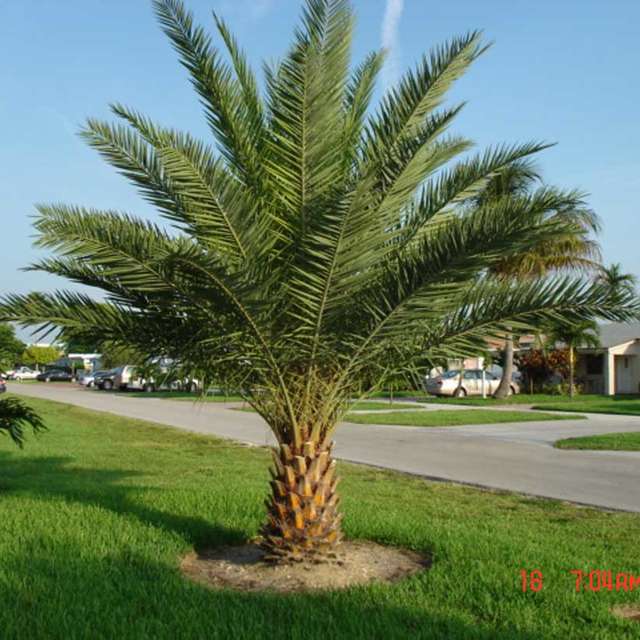
A water dam is a low ring of soil built around a newly planted palm. It holds water over the root zone so the soak goes down where the roots need it, instead of running off across the lawn. For a new Sylvester palm in Vero Beach, a well-built dam is one of the simplest steps to help the root ball settle in during its first weeks in the ground.
What a Soil Dam Does
When you water a newly planted palm, the water wants to spread. On a flat surface, it can run off in every direction before it soaks in. A dam stops that. It is a ridge of soil set just outside the edge of the planting hole. When you fill the basin with water, the dam keeps the water in place long enough to soak through the root ball and into the surrounding soil. This gives the roots a deep, complete drink each time.
Why the Root Zone Needs Full Soaking
A palm that has just been moved from the field has lost much of its fine root system during digging and root wrapping. The roots are working to reach the soil around them, and they need steady moisture while they do. Dry pockets around the root ball slow that process. A full soak fills the air spaces and helps the backfill settle against the roots. A dam is the tool that makes a full soak possible, especially in sandy Florida soil that drains quickly.
How to Build a Dam
Start with the planting hole already dug and the palm set at the correct height. The trunk should sit at the same level it grew in the field, and it should never be buried. Backfill the hole with the soil and gravel mix, working it in and packing out air pockets as you go. Then shape a ring of extra soil around the outside edge of the hole. The ring should be firm, even and tall enough to hold water. Smooth the inside of the basin so the water does not pool in one spot.
Soak the Palm Thoroughly
Once the dam is in place, fill the basin with water and let it soak in. Then refill it and let it soak again. Watch the water as it drains. If it runs over the top of the dam, the ring is too low or has a gap. Patch it with more soil and try again. A thorough soak right after planting helps remove the air around the roots and gives the palm a strong start.
Watering Schedule for the First Two Weeks
In the first two weeks, water the palm daily or every other day, depending on weather and how fast the soil dries. Check the soil with your finger. If the top layer feels dry, it is time to water. If the soil is still moist, wait. Heavy rain can fill the dam on its own, so you may not need to water on a stormy day. The goal is steady moisture, not a soggy basin that stays wet for days.
When to Keep the Dam and When to Remove It
Many growers keep the dam in place through the early weeks of establishment, because it makes each watering more effective. Once the palm is well rooted and the soil around it has settled, you can gradually lower the dam and spread the soil into the surrounding bed. Do this slowly. Removing the ring too early can send water running away from the root zone again. Watch the palm for signs of new growth and firm roots before you change the setup.
Mulch and the Ring of Soil
A light layer of mulch can help the soil hold moisture between waterings. Keep the mulch away from the trunk so the base of the palm can breathe. Do not pile mulch against the trunk or over the dam in a way that buries the crown. Mulch works alongside the dam. It slows evaporation, while the dam helps the water reach the roots.
Common Mistakes to Avoid
Some common errors can slow a new palm down. Building the dam too far from the root ball spreads the water too wide. Making the ring too low lets water escape. Burying the trunk or setting the palm too deep causes stress that can last for months. Forgetting to check the soil after a storm can leave the root ball dry. Keeping the dam too long can also trap standing water if drainage is poor. Watch the basin after each watering and adjust as needed.
Signs the Watering Plan Is Working
A palm that is settling in usually looks steady. The fronds hold their shape, the crown stays firm and the trunk does not lean or wobble. Over time, you may see new growth at the center of the crown. The soil in the basin should drain at a reasonable pace after each watering. If the palm is drooping, the leaves are browning quickly or the trunk feels soft at the base, call for advice before the problem grows.
Ask Us Before You Start
Sylvestris Tree Farms grows field-grown Sylvester date palms in Vero Beach, FL, and we help customers with planting and first-year care guidance. Our palms are not containerized. They are dug, root-wrapped and delivered to your site. If you have questions about building a dam or about watering a new palm, we are happy to talk them through. You can also read our guide on how to recognize and manage transplant shock to learn what to watch for in the weeks after planting. For more on the planting process, visit our planting care page. To request a quote for delivery or to ask about your planting plan, call Jerry at 772-778-3006.
Frequently Asked Questions
What is a water dam around a palm?
A water dam is a low ring of soil built around the planting hole. It holds water over the root zone so the soil soaks fully instead of running off.
How long should I keep the dam in place?
Many growers keep it through the early weeks of establishment. Lower it slowly once the palm is well rooted and the soil has settled.
How often should I water a new palm?
Water daily or every other day during the first two weeks, depending on weather and soil moisture. Check the soil before each watering.
How do I request a quote from Sylvestris Tree Farms?
Call Jerry at 772-778-3006 with your planting address. Sylvestris Tree Farms will provide a quote for delivery.