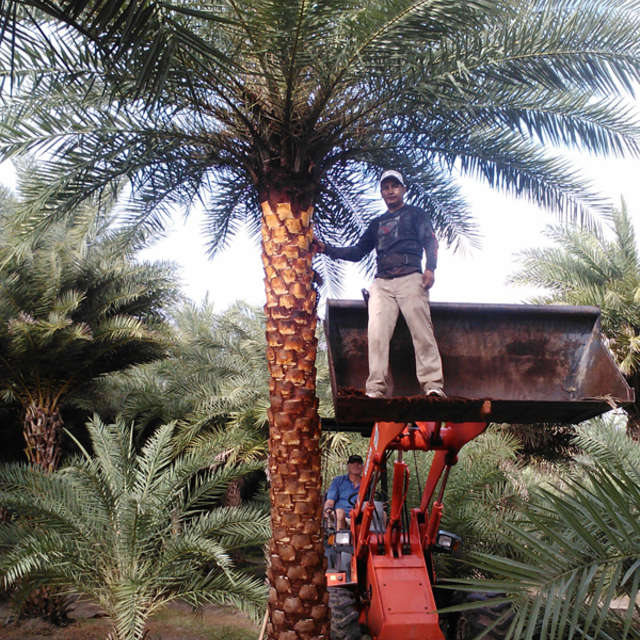
Trim a Sylvester palm only to remove fully dead or broken fronds and spent flower or fruit stalks, and never cut fronds that sit above the horizontal (the 9 and 3 o’clock line). UF/IFAS says no time of year is better than another for pruning. The diamond pattern on the trunk comes from the old leaf bases, and exposing it is a cosmetic choice, not a health need.
Do Sylvester Palms Need Trimming at All?
Not much. According to UF/IFAS, palm pruning is mainly about appearance, and from the palm’s point of view no time of year is better than another. A healthy, established Sylvester palm mostly needs the dead fronds taken off so the crown looks tidy and the trunk stays clear. Because the work is cosmetic, there is no schedule the palm requires. Many owners simply tidy up when the crown starts to look ragged.
Which Fronds Should You Remove, and Which Should Stay?
UF/IFAS gives a clear order of priority. Completely dead leaves and flower or fruit stalks can always be removed. Living leaves with severely kinked stems from wind or mechanical damage may also go, although after a bad windstorm it can help to keep a few damaged leaves so the palm can keep making food until new ones grow in.
The rule to remember is the horizontal plane. UF/IFAS cites the ANSI pruning standard, which says leaves with tips above the horizontal (the 9 and 3 o’clock positions) should not be removed. Everything higher than that is green, working foliage.
Yellowing lower fronds deserve a second look before you cut. UF/IFAS notes that half-dead or discolored lower leaves usually point to a potassium or other nutrient shortage, and that those leaves should stay on because they are supplying potassium the soil is not. Cutting them can speed decline, so fix the cause first. Our guide on why a Sylvester palm turns yellow or brown explains how to read the pattern.
When Is the Best Time of Year to Trim a Sylvester Palm in Florida?
Any time is fine for the palm. UF/IFAS adds two practical notes. Taking off dead leaves before hurricane season can reduce the debris a storm throws around, and after cold damage you should leave the damaged leaves on until the threat of further cold has passed. If the palm has just been planted, hold off on anything cosmetic while it settles in; our transplant shock guide covers what is normal in that stage.
What Is a Diamond Cut on a Sylvester Palm?
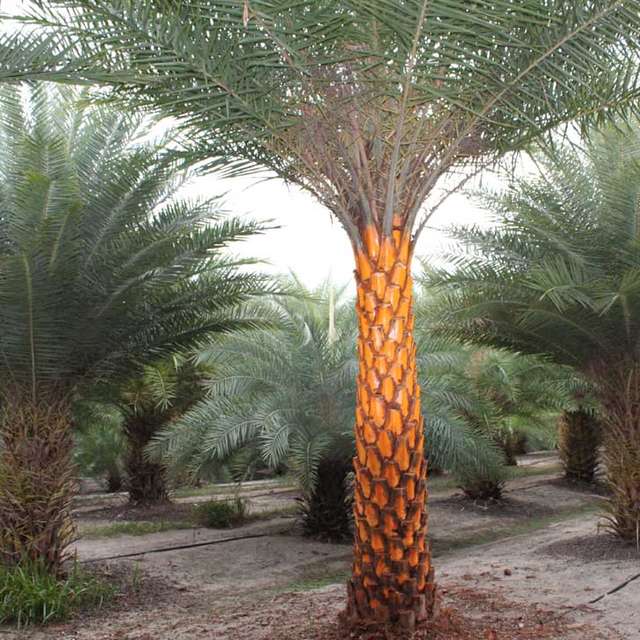
As a Sylvester palm ages, the bases of old fronds leave a diamond-shaped, textured pattern on the trunk. A diamond cut is the trimming practice of removing those old leaf bases so the pattern shows cleanly from the ground up. It is purely about looks, and it is done on the trunk rather than in the crown.
One caution applies. UF/IFAS advises against removing living older leaves to get a “pineapple” look, because freshly cut leaf bases can attract palm weevils. It also says never to cut into the trunk with a machete, and not to pull leaves that will not come off easily, since that can tear trunk tissue and leave wounds. The safe version of a diamond cut works with leaf bases that are already dead and loosening, and it is best left to someone who does it regularly. If you are buying a palm and want to know about trunk finish, ask when you call the farm at 772-778-3006.
How Do You Trim Safely Around the Spines?
Sylvester palms carry sharp spines at the base of the fronds, so protect yourself before you start. Wear heavy gloves, long sleeves and eye protection, and work from a ladder or lift rather than climbing the trunk. UF/IFAS specifically says never to use climbing spikes, because the wounds never heal and can invite trunk rot or palm weevils. Cut fronds close to the trunk, and keep tools clean between palms.
Why Do Hurricane Cuts and Over-Trimming Weaken a Palm?
The traditional “hurricane cut” strips most of the crown and leaves only a tuft of the youngest leaves. UF/IFAS reports that after the 2004 and 2005 Florida hurricanes, palms pruned this way were more likely to lose their crowns than palms with fuller canopies. Over-trimming also removes the leaves the palm uses to make food. We cover how these palms actually handle storms in our hurricane and high-wind guide.
What We Recommend
Keep it light. Remove dead fronds and spent stalks, leave anything green or only partly discolored while you fix the underlying cause, and skip the hurricane cut. Treat a diamond cut as an optional finishing touch, not a maintenance task. For care basics after planting, see our planting and care guide. If you are choosing a palm, The Palms shows the sizes and grades we grow, and you can call the farm with any trimming question.
Frequently Asked Questions
Can I cut the green fronds on my Sylvester palm?
Only dead or badly damaged ones. UF/IFAS cites ANSI pruning standards that say no leaves with tips above the horizontal plane (the 9 and 3 o’clock positions) should be removed. Yellowing lower fronds may still be feeding the palm, so leave them on while you fix the cause.
How much does a diamond cut cost?
There is no standard figure. It depends on the size of the palm and how much trunk is involved, so we do not publish a price. Call the farm at 772-778-3006 if you are buying a palm and want to ask about it.
Will trimming make my Sylvester palm grow faster?
No. UF/IFAS describes palm pruning as mainly aesthetic and says that, from the palm’s perspective, no time of year is better than another. Pruning does not speed up growth.
Is it safe to climb a palm with spikes to trim it?
No. UF/IFAS says never to use climbing spikes on a palm you are pruning, because the wounds never heal and can let in trunk diseases or attract palm weevils. Use a ladder or a lift instead.