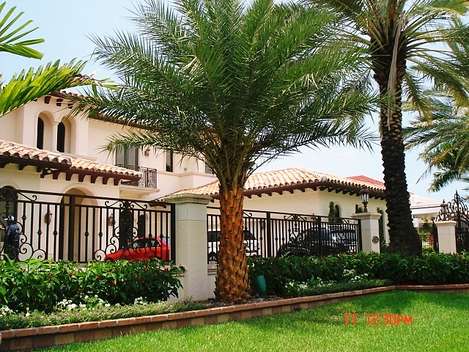
Sylvester palms are prized for cold tolerance, wind resistance, a clean trunk and low upkeep once they are established. The trade-offs are sharp spines at the frond bases, small fruit that drops in season, and a slow growth rate that makes a larger field-grown palm the practical choice. Plant them where the crown will not overhang walkways, pool edges or a roofline.
What Are the Advantages of a Sylvester Palm in a Florida Landscape?
The main reasons people choose a Sylvester palm are practical. It is a Phoenix sylvestris, a cold-hardy palm that handles Florida winters better than many tropical options, and it holds up well in wind once it is rooted in. Our cold-hardy palm guide and hurricane and high-wind guide go into the details.
Upkeep is the second reason. A healthy, established palm mostly needs dead fronds removed, and the trunk, with its textured leaf-base pattern, does most of the visual work. Pruning is cosmetic rather than required, as we explain in how and when to trim a Sylvester palm.
What Are the Honest Drawbacks?
Three things are worth knowing before you plant one. First, the spines. The frond bases carry sharp spines, so the palm needs respectful handling during planting and pruning. Second, the fruit. Sylvester palms set small clusters of fruit that drop on the ground in season, which is part of why some owners find them untidy near patios and driveways. Third, the growth rate. This is a slow-to-moderate grower. A young palm takes years to reach a full crown, which is why many buyers choose a field-grown palm that already has its trunk height. Our growth rate and height covers what to expect over time.
Do Sylvester Palms Have Thorns, and Where Should You Not Plant One?
Yes. The spines at the base of the fronds can cause painful punctures, so wear gloves and long sleeves when you handle the palm, and keep children and pets away from the base during trimming. Plant it where people will not brush past the lower fronds every day. Do not plant a Sylvester palm where the crown will overhang a walkway, a driveway or a path people use at night, and leave room between the palm and any structure as it grows.
The spines are a handling issue, not a reason to avoid the palm for a landscape that is used normally. Plenty of owners plant them at the front of a property. The question is placement, which is covered in the next sections.
Do Sylvester Palms Produce Dates, and Are They Edible?
Sylvester palms do produce fruit. The fruit is small, and clusters can fall in season. Sylvester fruit is edible, but it is not grown for eating and is not something we sell or promote as food, so treat it as an ornamental feature rather than a crop. If fruit drop is a concern, plan for a clean-up routine during the season or plant farther from patios and pool decks.
Are Sylvester Palms Messy Near a Pool?
They can be. Falling fruit and dead fronds both end up in the pool if the crown sits right over the water. For that reason, plant with the mature crown in mind rather than the size of the palm on the day you plant it. Keep the trunk several feet back from the pool edge, and expect to skim the surface during fruit season. A palm that has room to spread is easier to keep clean than one squeezed in tight. Our growth habit explains how far a palm spreads over time.
Front Yard, Entrance or Property Line: Where Does It Look Best?
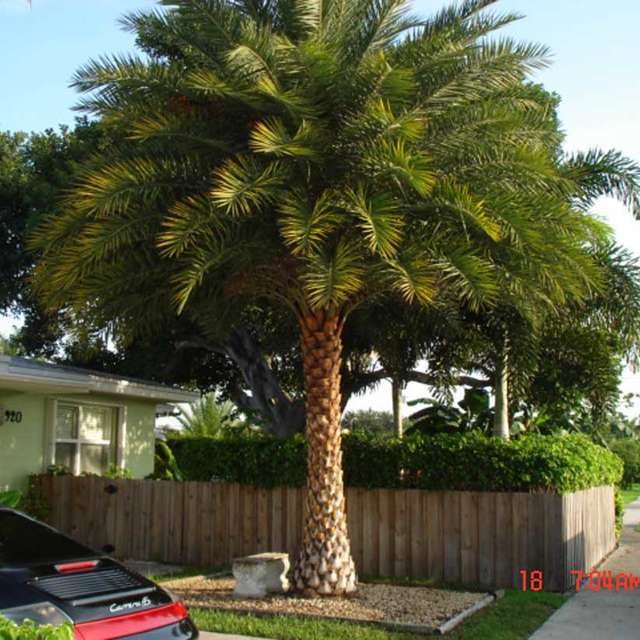
Sylvester palms look strongest as a single specimen with open space around the base, such as a front yard, an entrance or a focal point near a driveway. They also work well in a row along a property line when there is room for the crowns to develop. Our gallery shows installed palms from the farm so you can judge the scale against your own house.
How Does a Sylvester Palm Compare With Canary and Medjool?
A Sylvester palm is a different choice from a Canary Island date palm or a Medjool. The comparison comes down to cold tolerance, trunk look, fruit and growth habit. Our side-by-side comparison covers all three.
What We Recommend
Choose a Sylvester palm for cold tolerance, wind resistance and a clean trunk, and plan the placement before the planting day. Keep the crown away from walkways, pools and rooflines, and treat fruit drop as a routine cleanup, not a surprise. If you want a palm that already has the trunk height you are after, look at The Palms for the sizes and grades we grow, or call the farm at 772-778-3006 with your site questions.
Frequently Asked Questions
Are the thorns poisonous?
The spines are not a poison, but they can cause painful punctures. Wear gloves and long sleeves when you handle the base of the palm, and keep the lower fronds out of reach of children and pets.
Can you eat the dates from a Sylvester palm?
The fruit is edible, but Sylvester palms are not grown for eating. Treat the fruit as an ornamental feature and plan for it to drop in season.
Do Sylvester palms attract pests?
Palms in general can attract palm weevils when they are wounded, which is one reason pruning should be done cleanly and without climbing spikes. See our trimming guide for safe pruning practice.
Is a Sylvester palm a good pool palm?
It can be, if you give the crown room. Keep the trunk well back from the pool edge so fruit and fronds do not fall straight into the water, and expect routine skimming during fruit season.